
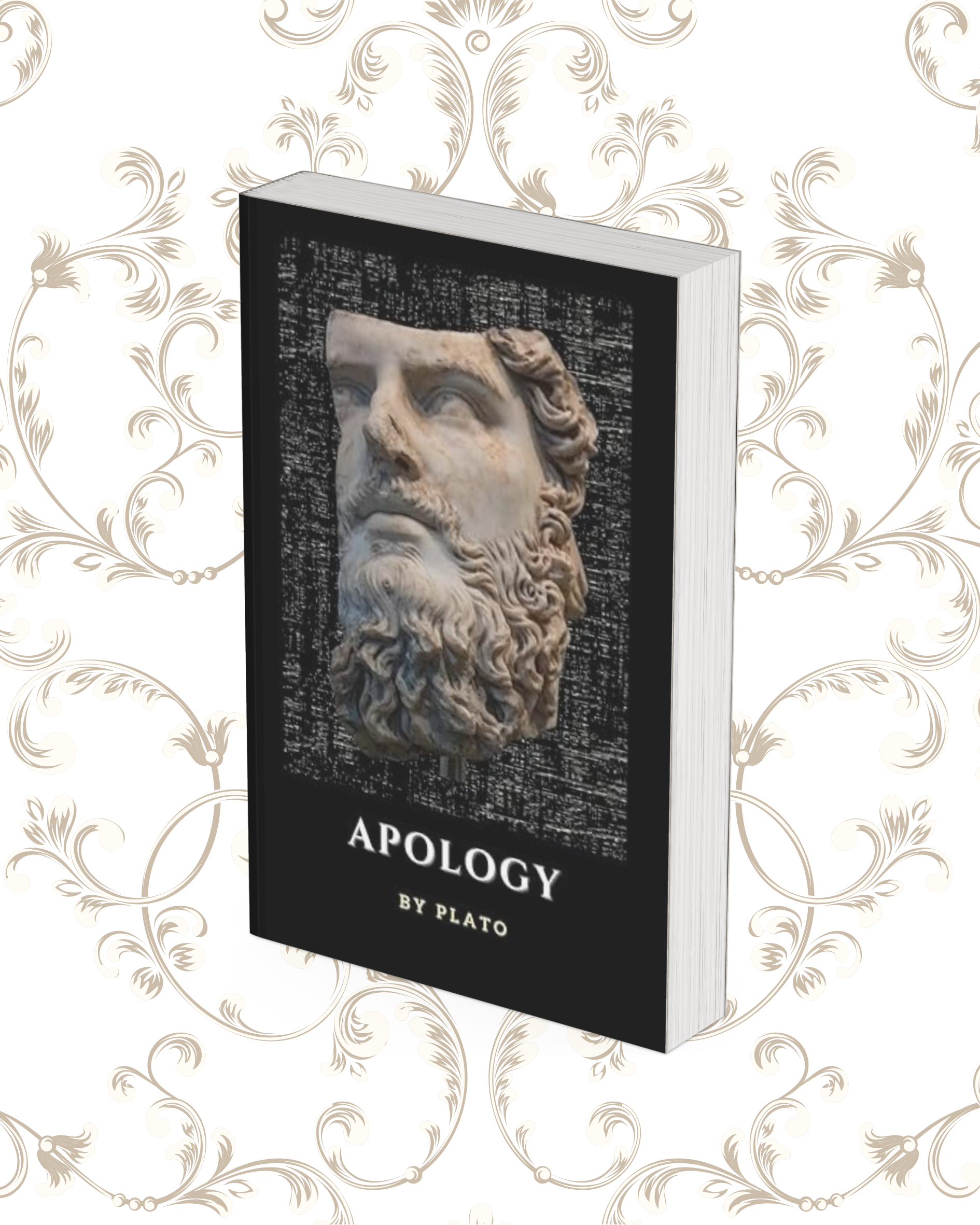
The Apology by Plato, is a Socratic dialogue of the speech of legal self-defence which Greek philosopher Socrates spoke at his trial for impiety and corruption in 399 BC. “Apology” here has its earlier meaning (now usually expressed by the word “apologia”) of speaking in defence of a cause or of one’s beliefs or actions. Plato, who was an eyewitness to the trial, relays the philosopher’s defence against charges of “corrupting the youth” and “not believing in the gods in whom the city [of Athens] believes, but in other daimonia that are novel”.
Among the primary sources about the trial and death of Socrates, the Apology is one of four Socratic dialogues, along with Euthyphro, Phaedo, and Crito, through which Plato details the final days of the philosopher.



Reviews
There are no reviews yet.